If your home lost power in a storm and you’re not sure why, the problem might be on your side of the connection rather than the utility’s. Call your utility company first. In Champaign, IL, that’s usually Ameren, and they can tell you whether it’s a wider outage or something specific to your house, including whether you need an electrician.
That surprises a lot of homeowners. The instinct is to call an electrician right away. But the utility has to be involved first, both to diagnose the problem and, if your mast or service wire is damaged, to safely disconnect the overhead line before any electrician can start repair work.
What to Do First
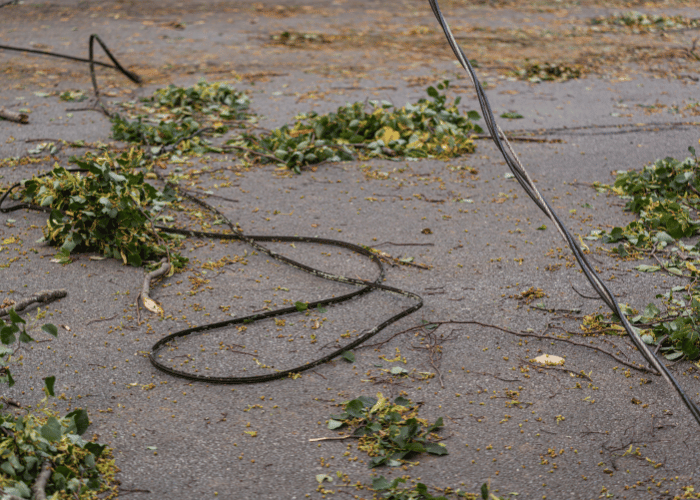
Don’t approach a downed line or a bent, detached mast. Treat any loose or hanging wire as live, even if the power looks like it’s off.
Then work through this in order:
- Call your utility company. They’ll tell you if it’s a wider outage or a problem specific to your home.
- If it’s a wider outage, you’re waiting on the utility, not an electrician.
- If your home is the only one without power, the utility will check whether your mast or service wire is damaged.
- If it is, the utility disconnects the overhead line from your service gear before anyone else can safely work on it.
- Only after that’s done can an electrician repair or replace the mast.
If the storm hits at night, expect the on-call tech’s priority to be ensuring the site is safe, not completing the full repair unless the damage is minor. Full repairs are usually completed the next day.
What Actually Connects Your House to the Grid
The point where your home meets the utility’s wires is called the electrical mast, sometimes the weatherhead or service mast. It’s the metal pipe on your roofline that the overhead power lines attach to before the wiring runs down into your meter and panel.
The utility owns and maintains everything up to that connection point. Everything from the mast inward, including the meter base and the wiring into your home, is the homeowner’s responsibility. That split matters more than people realize until a storm damages one side of it.
Signs Your Mast or Weatherhead Took Storm Damage
A bent or torn loose mast is usually obvious once you know to look for it. Common signs include:
- The mast is visibly bent, leaning, or pulled away from the roofline
- Wires are hanging loose or disconnected near the roof
- Your meter shows no activity, even though neighbors have power
- You’ve reset your breakers, and nothing changes
- There’s a broken conduit or piping on the ground near your house
Falling limbs and high wind are the usual causes of Central Illinois storms. A tree doesn’t have to hit the house directly. It only has to pull down the line hard enough to tear the mast loose.
Why the Utility Handles This First
Electricians can’t work near a damaged mast while the line is still connected. The utility must disconnect the overhead line from your service gear before any repair work begins. That’s a safety step, not red tape.
Once that’s done, a licensed electrician repairs or replaces the mast. If the storm hits overnight, the goal that night is usually just making sure the situation is safe. The actual repair typically happens the following day. After the repair, the utility reconnects your service.
Storm Damage Rarely Stops at the Electrical Line
A storm strong enough to bend a mast or bring down a line is usually strong enough to damage other parts of your home. Roofing, siding, and gutters take the same wind and debris, and the electrical damage tends to get all the attention because the outage feels most urgent.
C-U Trade Services handles the electrical repair itself, so once the utility clears you for repair, you’re not waiting on a general callback. If the same storm damaged your roof or siding, our construction company, C-U Under Construction, can assess the damage and assist with insurance documentation, so you’re not coordinating with two separate companies on your own.
Get Your Power Back On
If a storm damaged your electrical service, call your utility company first. If they tell you an electrician is needed, contact C-U Trade Services, and we’ll take it from there. If you’re already dealing with roof or siding damage from the same storm, mention it, and we’ll loop in C-U Under Construction so both get handled without extra runaround.
Q: Should I call an electrician or the utility company first?
A: Call your utility company first. They’ll confirm whether it’s a wider outage and let you know if a damaged mast or service wire requires an electrician. The utility must also disconnect the overhead line before an electrician can safely start repair work.
Q: Am I responsible for fixing my electrical mast after a storm, or is that the utility company’s job?
A: You’re responsible for the mast, weatherhead, and meter base. The utility owns the lines running up to that connection point. If a storm damages your mast, you’ll need a licensed electrician to repair it, but the utility has to disconnect the line first.
Q: How do I know if my mast is damaged instead of a wider outage?
A: Check if neighboring homes have power. If they do and yours doesn’t, and your breakers are fine, the problem is likely on your property, not the grid.
Q: Can I fix a damaged electrical mast myself?
A: No. Mast repair involves working near live utility connections and requires the utility to disconnect service first. This is licensed electrician work.
Q: How long does mast repair usually take?
A: If a storm takes out power overnight, the priority that night is making sure the site is safe, not completing the repair. Full mast repair is usually completed the following day, unless the damage is very minor.